
A flatbed arrives for a heavy piece of machinery, but the shipper has nothing suitable to place beneath it. The driver may carry a few boards, although their size and condition may not match the load. Loading stops while someone searches for lumber that should have been ready before the truck reached the dock.
Wood dunnage is simple, but it often determines whether awkward freight can be lifted, supported and secured properly.
What Does Wood Dunnage Do?
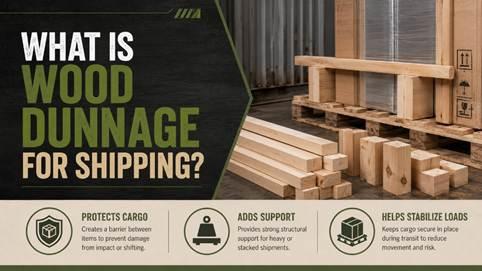
Dunnage is material used to support, separate, block or protect cargo during storage and transportation. Wood is commonly used because it is strong, easy to cut and available in dimensions suited to industrial loads.
A piece of dunnage can raise equipment from a trailer deck so forklift tines or lifting equipment can reach beneath it. It can separate stacked products, fill planned spaces or provide a surface for strapping. Larger timbers may support machinery, fabricated steel, pipe, building materials and other freight that does not sit neatly on a standard pallet.
Dunnage is not a substitute for a complete securement plan. Its size and placement must suit the cargo and the forces expected during transport.
Flatbed and Open Deck Freight Often Needs It
Open deck shipments frequently use wood beneath the load. The boards keep cargo away from the trailer surface and create access for forklifts, cranes or rigging.
The correct dimensions depend on the weight and shape of the item. Light bundles may need ordinary cut lumber, while heavy equipment may require larger timbers.
Shippers should confirm dunnage requirements with the carrier and have the material staged before loading begins.
Blocking, Bracing and Dunnage Are Related
The terms are sometimes used together, but they do not always describe the same job. Dunnage supports or separates cargo. Blocking is positioned to resist movement in a particular direction. Bracing strengthens that blocking or transfers forces into a suitable part of the trailer, crate or container.
A few loose boards placed beside a machine are not automatically effective blocking. Lumber must be sound, correctly sized and installed as part of a plan. Nails, fasteners, straps and other securement components also need to suit the application.
Cargo securement should be planned by people familiar with the shipment and transportation method. Split lumber can create a false sense of security.
Custom Cut Lumber Reduces Loading Problems
Standard 2 by 4, 2 by 6, 4 by 4 and 4 by 6 lumber covers many common needs, but not every shipment uses standard dimensions. Equipment feet may need support at a particular height. A crate may require identical runners. A production line may need repeatable cut stock delivered in quantity.
Custom cutting keeps each load consistent and reduces time spent measuring lumber at the dock. For repeat shipments, documenting the required lengths, quantities and placement can turn a troublesome loading job into a routine process.
International Shipments May Require Treated Wood
Solid wood dunnage used in international shipping can fall under ISPM 15 rules, just like wood pallets and crates. Requirements vary by destination and shipment, so exporters should confirm what applies before loading.
Compliant wood packaging material must receive an approved treatment and carry the proper mark. Loose, unmarked pieces added at the last moment can create inspection trouble even when the pallet itself is compliant. International dunnage should therefore be included in the export packaging plan from the beginning.
Order Cut Stock Lumber and Dunnage in Phoenix
AAA Pallet & Lumber Company supplies custom cut lumber, dunnage, strap notch boards, pallets, skids and crates for packaging, construction and manufacturing applications across the Phoenix Valley. Whether you need standard boards or repeatable custom dimensions for an industrial shipment, the team can prepare material to your specifications. Call AAA Pallet & Lumber Company at 602-278-1450 for a free quote on wood dunnage and cut stock lumber.
References
https://www.palletone.com/what-is-dunnage-a-clear-guide-for-shipping-professionals/
https://www.fmcsa.dot.gov/regulations/cargo-securement/cargo-securement-rules
https://www.aphis.usda.gov/plant-imports/wood-packaging-material