
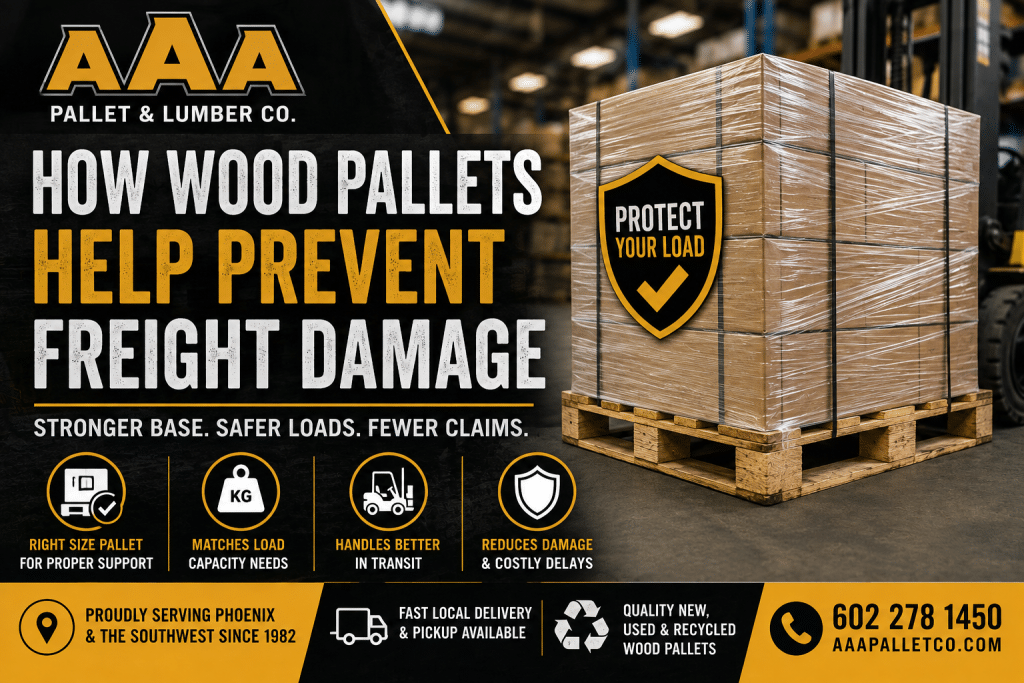
How the Right Wood Pallet Helps Prevent Freight Damage
A damaged shipment does not always begin with the box, wrap or carrier. Sometimes the problem starts underneath the load. The pallet is the foundation of a unitized shipment, and when that foundation is the wrong size, too weak or already damaged, every other part of the load has to work harder.
For Phoenix manufacturers, warehouses and distributors, choosing the right wood pallet can help protect products while also making loading, storage and handling more predictable.
Match the Pallet to the Product
The first question should be simple: what does the pallet actually need to carry? Weight matters, but so does the way that weight is distributed. A compact machine can place concentrated pressure on a small area, while cartons may spread the same total weight over most of the deck.
Pallet dimensions matter as well. The common 48 by 40 inch wood pallet suits many North American supply chains, but it is not automatically right for every product. Oversized or unusually shaped freight may need a custom pallet so the load is properly supported.
AAA Pallet & Lumber Co. can manufacture pallets and skids to specific requirements when a standard footprint does not provide the right fit.
Avoid Product Overhang
Boxes should generally stay within the pallet footprint. When cartons hang over the edge, their unsupported corners and sidewalls become more vulnerable to crushing, impact and puncture.
FedEx freight packaging guidance specifically warns against overhanging stacks and notes that freight extending beyond the pallet perimeter can be damaged during normal handling or by adjacent freight.
A correctly sized pallet gives the load a solid base. It also makes stretch wrapping, strapping and placement inside a trailer easier. If a product regularly extends beyond a standard pallet, changing the pallet specification may be more effective than trying to compensate with additional wrapping.
Start With a Sound Pallet
A pallet does not need to look new to be useful, but it does need to be suitable for the job. Broken deck boards, badly split stringers, loose fasteners or major distortion can reduce confidence in the load before it even reaches the truck.
Used pallets can be an economical choice when they have been properly inspected and repaired. The right grade depends on the shipment. A routine local load may not need the same pallet specification as expensive equipment moving through several distribution centers.
It is also worth checking pallets before each use. A pallet that arrived in good condition may be damaged by a forklift or rough handling during a later trip.
Think About Forklift and Warehouse Handling
A pallet has to work with more than the product. It also has to work with pallet jacks, forklifts, racks, conveyors and the receiving facility.
Four way entry pallets can provide more flexibility for forklift access, especially when space is tight. Consistent dimensions are also important where automated systems or racking are involved. A pallet that catches, twists or sits unevenly can slow handling and increase the chance of product movement.
Good pallet selection therefore supports both freight protection and warehouse efficiency.
Do Not Forget Export Requirements
International shipments add another consideration. Regulated solid wood packaging used in international trade may need to meet ISPM 15 treatment and marking requirements. USDA APHIS advises exporters to use compliant wood packaging so shipments meet the requirements of the destination country.
The correct pallet should be selected before the shipment is built, not after the freight is ready to leave.
Order Wood Pallets in Phoenix From AAA Pallet & Lumber Co.
AAA Pallet & Lumber Co. supplies new, used, recycled, custom and heat treated wood pallets throughout the Phoenix Valley and greater Southwest. We can help businesses match pallet size, construction and condition to the way their products are stored and shipped. For dependable pallet supply and a free quote, call AAA Pallet & Lumber Co. at 602 278 1450 today.
References
FedEx: Packaging Guidelines for Shipping Freight